Dense Breasts: What That Line in Your Mammogram Letter Means
October 5, 2026 · Breast Cancer, Cancer Prevention
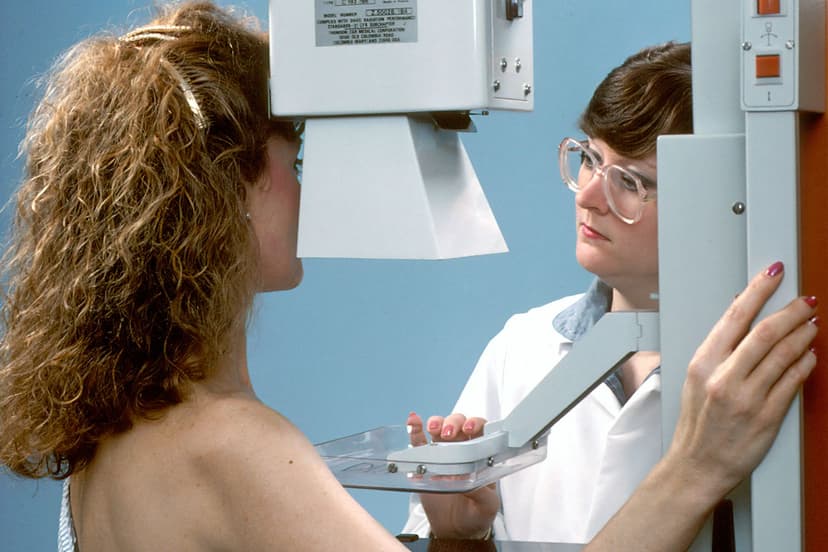
If your last mammogram report included the sentence "Your breast tissue is dense," you're not alone. Nearly half of women 40 and older have dense breasts. Since September 10, 2024, the U.S. Food and Drug Administration has required every mammography facility in the country to tell patients whether their breast tissue is dense or not dense. Many women are now seeing that line for the first time and wondering what to do with it.
Here's what breast density is, why it matters, and the questions worth asking your doctor.
What "dense breasts" means
Breasts are made of three kinds of tissue: glandular tissue (the milk glands and ducts), fibrous connective tissue, and fat. Dense breasts have relatively more glandular and fibrous tissue and less fat.
Density has nothing to do with how your breasts look or feel. Size and firmness don't tell you anything, and neither you nor your doctor can detect it in an exam. Only a radiologist reading your mammogram can tell.
The four density categories
Radiologists sort breast density into four categories, using a system called BI-RADS. According to the National Cancer Institute, roughly:
- Almost entirely fatty: about 10% of women
- Scattered areas of fibroglandular density: about 40% of women
- Heterogeneously dense: about 40% of women
- Extremely dense: about 10% of women
The last two categories count as "dense breasts." Your full report from the facility usually names your category, even if the letter just says "dense."
Why density matters
It makes mammograms harder to read. On a mammogram, fat looks dark, while dense tissue looks white, and so do most tumors. Looking for a cancer in dense tissue is a bit like looking for a snowball in a snowstorm. Mammograms are more likely to miss cancer in women with dense breasts.
It is also a risk factor. Women with dense breasts have a somewhat higher chance of developing breast cancer than women with mostly fatty breasts. The National Cancer Institute notes an important reassurance: among women who are diagnosed with breast cancer, those with dense breasts are not more likely to die of it.
What the new FDA notice says
Every mammogram report and patient letter must now include a short, standard statement. Every letter explains that breast tissue can be dense or not dense, and that dense tissue makes cancer harder to find on a mammogram and also raises the risk of breast cancer. It then says whether your tissue is dense. If it is, it adds that other imaging tests besides a mammogram may help find cancers in some people. Both versions end the same way: talk to your health care provider about breast density, your risk for breast cancer, and your individual situation.
The notice is information, not a diagnosis. Having dense breasts is normal and doesn't mean anything was found.
Should you get extra screening tests?
This is the question most women have, and the honest answer is: it depends on your overall risk. The options include:
- 3D mammography (digital breast tomosynthesis): takes images from several angles, which can make it easier to see through dense tissue. Many centers now use it routinely.
- Breast ultrasound: uses sound waves, with no radiation. It can find some cancers a mammogram misses, but it also leads to more false alarms and biopsies.
- Breast MRI: the most sensitive test, usually with a contrast dye injected into a vein. It's typically recommended for women at high risk, and it's more expensive.
- Contrast-enhanced mammography: a newer option some centers offer, especially for women who can't have an MRI.
Expert groups don't fully agree. The U.S. Preventive Services Task Force says there isn't yet enough evidence to recommend for or against extra ultrasound or MRI for women whose only risk factor is dense breasts. The American College of Radiology recommends breast MRI for women with dense breasts who want extra screening, and contrast-enhanced mammography or ultrasound for those who can't have an MRI. In practice, the decision usually comes down to your whole risk picture: your density category, family history, genetics and past breast biopsies.
What insurance covers
Coverage for extra tests because of density alone varies by plan and by state; a number of states have their own laws on it. A newer federal rule helps in one important case. For most private plans, starting with plan years that began on or after December 20, 2025, follow-up imaging or a biopsy needed to complete screening must be covered with no cost sharing in-network. That applies when your mammogram shows something that needs a closer look. Before you book a supplemental test, call your plan and ask whether it's covered and whether you need a referral.
Questions to ask your doctor
- Which density category am I in?
- Taking density, family history and other factors together, what's my estimated lifetime risk of breast cancer?
- Would 3D mammography, ultrasound or MRI make sense for me, and how often?
- What are the downsides for me, such as false positives, biopsies or costs?
- Should I be screened every year rather than every two years?
- Should I see a genetic counselor because of my family history?
Can breast density change?
Yes. Density usually decreases with age, especially after menopause. Having children is also linked to lower density. Menopausal hormone therapy tends to increase it, and density is also linked to lower body weight. There's no diet or supplement shown to reduce breast density, so the useful focus is on getting the right screening.
The bottom line
Dense breasts are common and normal, but they make mammograms harder to read and raise risk modestly. Keep up with regular mammograms; here's what the updated screening advice says. Ask your doctor whether extra imaging makes sense for you. If you need a center that offers 3D mammography, ultrasound or breast MRI, search our imaging and screening directory by ZIP code.
This article is for general information and is not medical advice. Talk with your doctor about your own screening plan.
Sources
- National Cancer Institute: Dense Breasts
- DenseBreast-info: FDA national dense breast reporting (required wording)
- FDA Law Blog: FDA to require breast density notification (2023 final rule; effective September 10, 2024)
- U.S. Preventive Services Task Force: Breast Cancer Screening (2024)
- Healio: American College of Radiology 2023 screening recommendations
- DenseBreast-info: updated federal breast screening coverage guidelines