Mammograms Now Start at 40: What the Updated Screening Advice Means for You
October 5, 2026 · Breast Cancer, Cancer Prevention
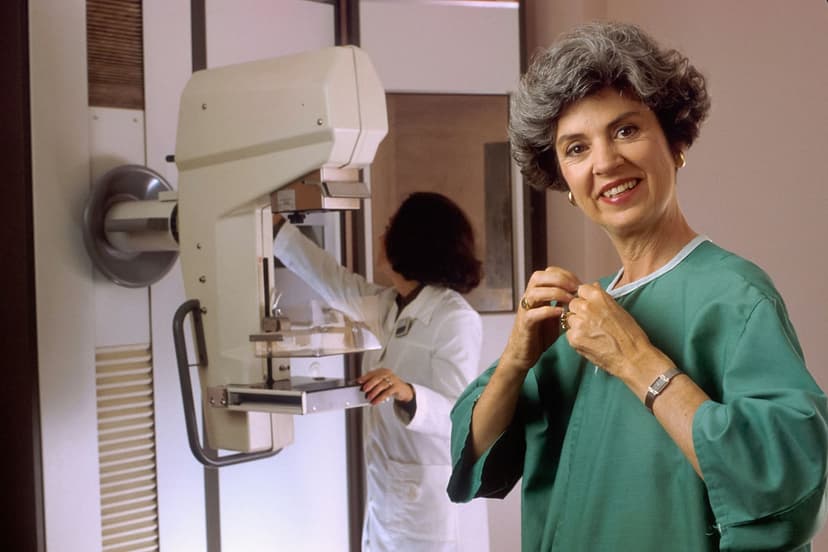
For years, women in their 40s heard mixed messages about mammograms. Some groups said start at 40, others said wait until 50. In 2024 the U.S. Preventive Services Task Force, the independent panel whose advice shapes what most health plans must cover, settled much of that debate. It now recommends a screening mammogram every two years for women ages 40 to 74.
Here is what the advice says, why it changed, how often to go, what your insurance should pay for, and when you might need to start sooner.
What the screening advice says
- Ages 40 to 74, average risk or some added risk: a mammogram every two years. This includes women with a family history of breast cancer or dense breasts.
- Age 75 and older: the task force found too little evidence to recommend for or against. Whether to keep screening is a decision to make with your doctor, based on your health.
- Who it doesn't cover: people with a BRCA1 or BRCA2 gene change, people who had high-dose radiation to the chest at a young age, people whose earlier biopsy showed a high-risk change such as atypical hyperplasia or LCIS, and people who have already had breast cancer. They need a personal screening plan, which often starts earlier and may include MRI.
Before 2024, the task force advised routine screening from 50 and an individual decision in your 40s. The new advice replaces that.
Why the starting age dropped to 40
Breast cancer is the most common cancer in American women apart from skin cancer. The American Cancer Society estimates that about 321,910 women will be diagnosed with invasive breast cancer in 2026 and about 42,140 will die of it.
Two findings drove the change. More women in their 40s are being diagnosed, with rates rising about 2% a year. And the task force's modeling found that screening every other year from 40 to 74 prevents about 8 breast cancer deaths for every 1,000 women screened, compared with no screening. Starting at 40 rather than 50 accounts for about 1 of those 8.
The benefit is larger for Black women, who are about 40% more likely to die of breast cancer than white women. They are also more likely to be diagnosed with aggressive types such as triple-negative breast cancer. Starting at 40 gives more chances to find these cancers early.
Every year or every two years?
The task force prefers every two years. Its models showed that screening every two years keeps most of the benefit of yearly screening, with fewer false alarms and fewer biopsies. Other expert groups recommend more frequent screening:
- American Cancer Society: women 40 to 44 can choose to start yearly mammograms; yearly from 45 to 54; every one or two years from 55.
- American College of Radiology: yearly mammograms from 40.
Both schedules are reasonable. The right one for you depends on your risk and how you weigh more frequent screening against the chance of a callback that turns out to be nothing. That's a good conversation to have with your doctor at your next checkup.
Will insurance pay for it?
Most private health plans: under the Affordable Care Act, most plans must cover recommended screening mammograms with no copay, coinsurance or deductible when you use an in-network provider. The U.S. Supreme Court upheld that requirement in June 2025. Women's preventive care guidelines from the Health Resources and Services Administration (HRSA) say plans should cover screening at least every other year and as often as once a year.
New in 2026, follow-up tests: one of the biggest complaints about screening has been the bill that comes after a callback. Starting with plan years that began on or after December 20, 2025, the updated HRSA guidelines say plans must also cover the follow-up needed to complete screening, with no cost sharing in-network. That means extra mammogram views, ultrasound, MRI or a biopsy. Older "grandfathered" plans don't have to follow these rules, so check with your plan if you aren't sure.
Medicare: Medicare Part B covers a screening mammogram every 12 months for women 40 and older, and one baseline mammogram between 35 and 39. You pay nothing for screening if the provider accepts Medicare assignment. A diagnostic mammogram, one ordered because of a symptom or an abnormal result, is billed differently: you typically pay 20% after the Part B deductible.
No insurance or limited coverage: the CDC's National Breast and Cervical Cancer Early Detection Program offers free or low-cost mammograms and follow-up tests to women with low incomes who are uninsured or underinsured. Most participants are 40 to 64.
A note on the task force: the panel has not met since 2025. In May 2026 the Secretary of Health and Human Services dismissed its two vice chairs, and in September 2026 he named eight new members. As of this writing, the 2024 breast cancer screening recommendation is still the task force's current advice, and the coverage rules above are in effect.
When to start earlier or screen differently
The American College of Radiology recommends that every woman have her breast cancer risk assessed by age 25, so that those at higher risk can start sooner. Ask your doctor about earlier or extra screening if you:
- have a parent, sibling or child who had breast or ovarian cancer, especially before 50, or several relatives with these cancers;
- carry a BRCA1, BRCA2 or other inherited gene change linked to breast cancer, or have a close relative who does;
- had radiation to the chest before age 30;
- have been told your lifetime risk is 20% or higher. For these women, yearly breast MRI often starts between 25 and 30;
- are of Ashkenazi Jewish ancestry, or are a Black woman. The American College of Radiology encourages an earlier risk assessment for both groups.
Screening is for people without symptoms. If you notice a new lump, skin dimpling, a nipple that turns inward, nipple discharge or any other change, see your doctor at any age. Don't wait for your next screening. Our guide to breast cancer symptoms has more.
Getting the most from your mammogram
- Choose a certified facility. Every mammography facility in the U.S. must be certified under the FDA's Mammography Quality Standards Act. You can search for imaging and screening centers near you in our directory.
- Ask about 3D mammography. Many centers offer digital breast tomosynthesis, often called 3D mammography. Ask whether your plan covers it.
- Time it well. If your breasts get tender before your period, book for the week after. Skip deodorant, powder and lotion under your arms and on your chest that day; they can show up on the images.
- Bring your history. Tell the technologist about any symptoms, implants or past biopsies. If you've changed facilities, have your earlier mammograms sent. Comparing images helps the radiologist.
- Look for your density result. Your report will now say whether you have dense breasts. Here's what that line means.
- Don't panic about a callback. Being asked back for more pictures is common, and most callbacks turn out not to be cancer.
The bottom line
If you are 40 or older and at average risk, it is time to start regular mammograms if you haven't already. Every two years is the task force's advice; yearly is also covered by most plans. If breast cancer runs in your family or you have other risk factors, ask your doctor now whether you should start earlier. To find a center near you, search our medical imaging and screening directory by ZIP code.
This article is for general information and is not medical advice. Talk with your doctor about the screening plan that's right for you.
Sources
- U.S. Preventive Services Task Force: Breast Cancer Screening, final recommendation (April 2024)
- American Cancer Society: Cancer Facts & Figures 2026
- American Cancer Society: breast cancer screening guideline
- Healio: American College of Radiology recommends risk assessment by age 25 (2023)
- International Foundation of Employee Benefit Plans: additional breast cancer screening coverage in 2026
- Contagion Live: Supreme Court upholds ACA preventive services coverage (June 2025)
- Medicare.gov: Mammograms
- CDC: National Breast and Cervical Cancer Early Detection Program
- Fierce Healthcare: Kennedy dismisses task force leaders (May 2026)
- STAT: Kennedy names new members to the task force (September 2026)